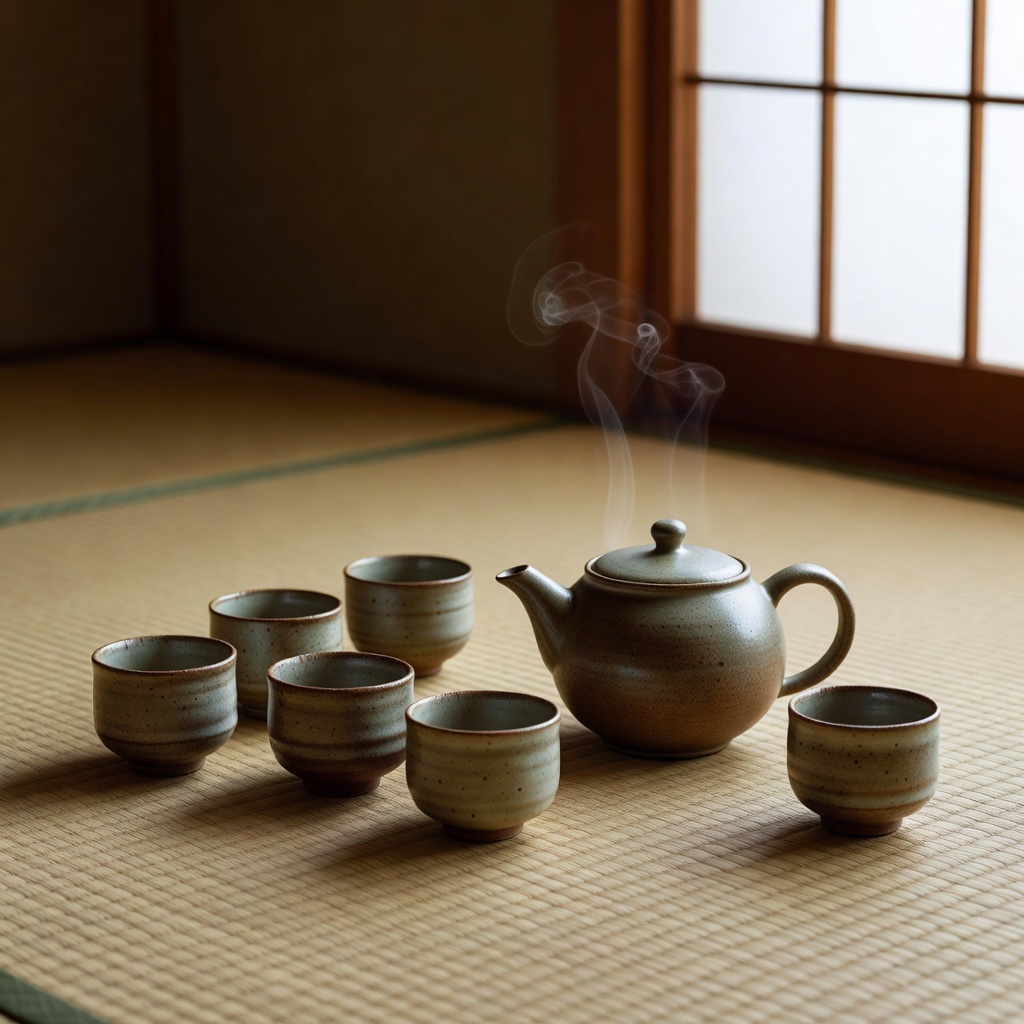
In Japan, tea is not merely a beverage. It is a philosophy made tangible — a practice of attention, hospitality, and deep respect. The Japanese tea ceremony, known as chadō or chanoyu, translates literally as "the way of tea," and in that word way lies the full weight of its significance.
To participate in a tea ceremony — either as host or guest — is to enter a space governed by an entirely different sense of time. Every gesture is considered. Every movement has been refined over centuries. And in that refinement lies something extraordinary: the mundane act of preparing and sharing a hot drink becomes a form of meditation.
"Ichi-go ichi-e — one time, one meeting. Each encounter, approached with full presence, will never come again."
The Four Principles of Chadō
The philosopher and tea master Sen no Rikyū (1522–1591) distilled the essence of the tea ceremony into four principles. These concepts remain the foundation of the practice today, and indeed, of much Japanese aesthetic thought:
Wa — Harmony
Harmony between people, between human activity and nature, and within the space of the tearoom.
Kei — Respect
Deep, sincere respect for all participants, for the utensils, for the ritual itself.
Sei — Purity
Physical cleanliness and, more deeply, a purification of the mind and spirit.
Jaku — Tranquility
The stillness that arises when the first three principles are practiced fully and sincerely.
The Tearoom as Sacred Space
A traditional tearoom (chashitsu) is deliberately small — often just four and a half tatami mats — so that all participants, regardless of social rank, must enter through a small low door (nijiriguchi) by bending down. This equalising gesture is intentional. Inside the tearoom, social hierarchies dissolve. There is only the tea, the host, and the guest.
The room contains a hanging scroll (kakejiku) — perhaps a piece of calligraphy or a painting — and a seasonal flower arrangement in an alcove (tokonoma). These are not decorations; they are the silent participants in the ceremony, chosen with great care to reflect the season, the mood, and the occasion.
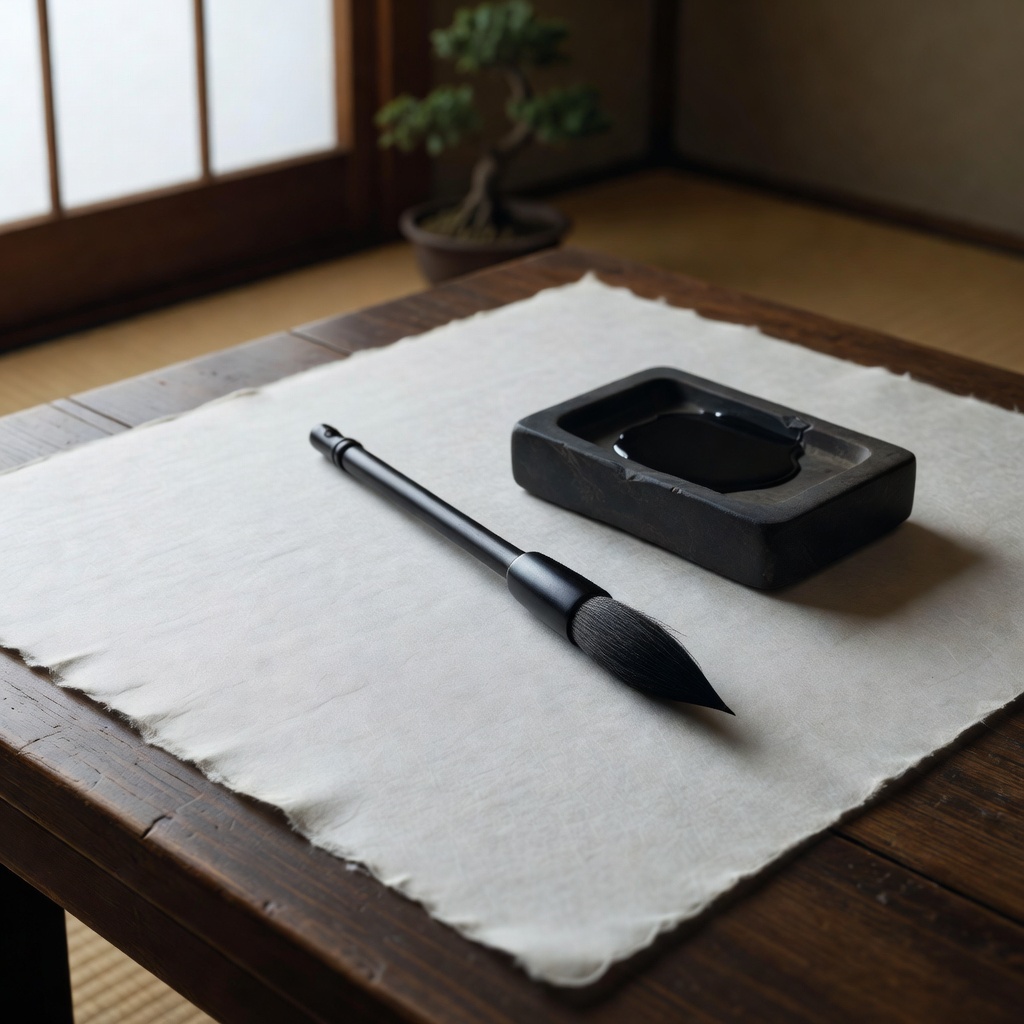
The art of calligraphy shares the tea ceremony's emphasis on the quality of each deliberate stroke
The Ceremony Itself: A Practice of Presence
The host arrives before the guests and prepares everything with the same care one might bring to the most important event of their life — because in the spirit of ichi-go ichi-e, this gathering is unique and will never be repeated. The charcoal is arranged, the water heated, the utensils set out and cleaned with a silk cloth (fukusa) in front of the guests.
The preparation of matcha — powdered green tea — involves sifting the fine powder, adding water at precisely the right temperature (around 70–80°C, never boiling), and whisking with a bamboo whisk (chasen) in a W-shaped motion until the tea is smooth and lightly frothy.
The guest receives the bowl with both hands, turns it twice to avoid drinking from its front, drinks in three and a half sips, then wipes the rim and turns the bowl back. Each of these gestures has a reason. Together, they create a rhythm of mutual care and attention that is as close to pure mindfulness as daily life can offer.
Bringing Tea into Everyday Life
You do not need a tearoom, a bamboo whisk, or years of training to begin drawing from the wisdom of chadō. The principles are available to anyone willing to slow down.
- Choose one moment each day to prepare a drink — tea, coffee, anything — with your full attention
- Lay out your cup before you begin. Notice its shape, its weight, its history
- While waiting for the water to heat, simply stand still. Do not reach for your phone
- Drink slowly. Notice the warmth, the flavour, the sensation of the cup in your hands
- Think of the person or people you might share this ritual with — and the gratitude that brings
The tea ceremony teaches us that how we do things is as important as what we do. In a world that prizes speed and efficiency, this is a quietly radical idea. And perhaps, in the end, a necessary one.