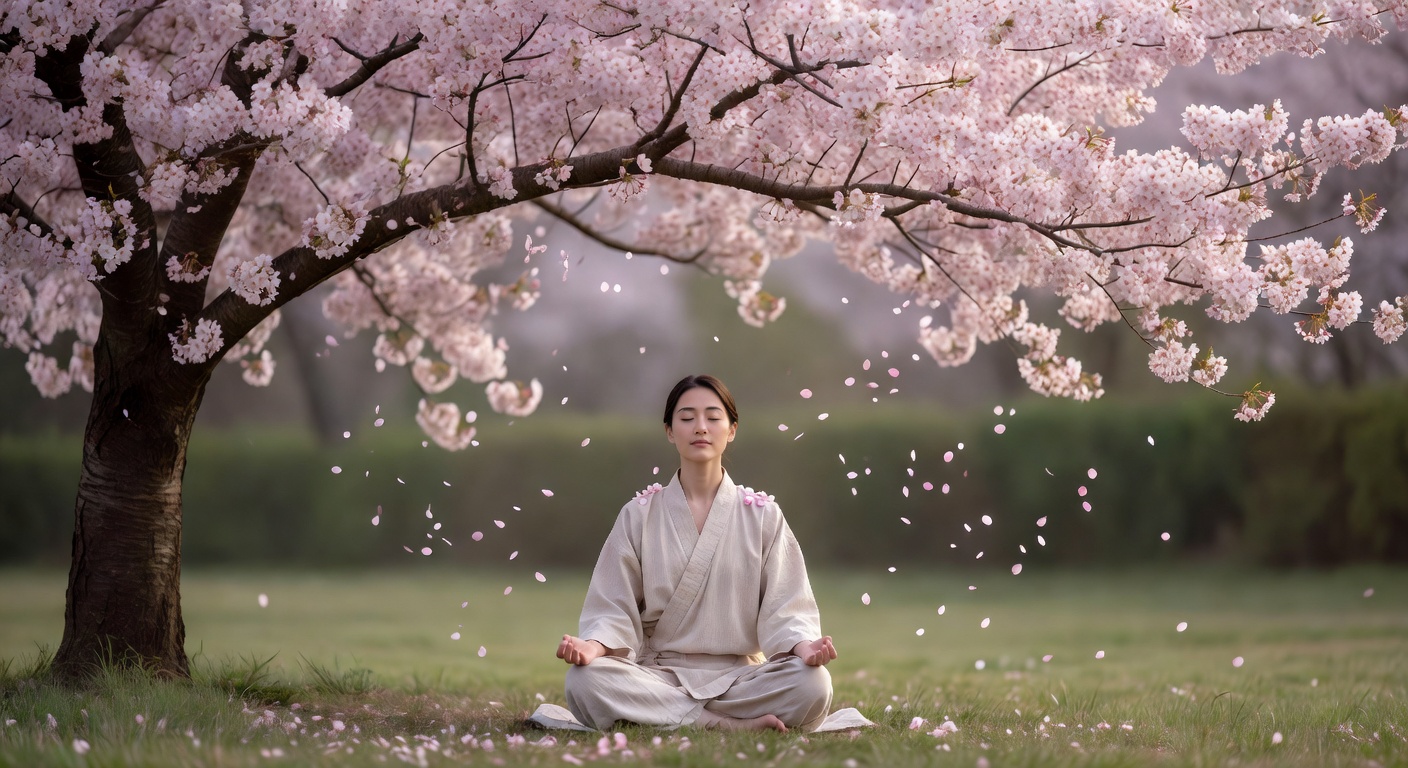
There is a word in Japanese — kokoro — that is often translated as "heart," but its meaning is far richer. It encompasses heart, mind, spirit, and the seat of emotion and intention all at once. Japanese mindfulness, in its many forms, is fundamentally a practice of returning to kokoro: to the still centre of oneself, beneath the noise of thought and daily life.
Unlike some Western interpretations of mindfulness as a productivity tool or stress-management technique, the Japanese approach is rooted in a philosophical and spiritual tradition stretching back centuries. It is not about achieving a calm state. It is about recognising the calm that is already there — always present, always available, always waiting beneath the surface of our busyness.
"Stillness is not the absence of movement. It is movement at its most complete — fully aware of itself."
Zazen: Sitting as a Complete Act
Zazen, or seated Zen meditation, is perhaps the most direct expression of Japanese mindfulness. Practised in Buddhist monasteries for centuries, it has increasingly found its way into the lives of ordinary people seeking a moment of genuine stillness in a busy world.
The practice is simple, though not easy. You sit — typically in the full or half lotus position, or simply cross-legged or in a chair if needed — with your spine upright, eyes downcast at a 45-degree angle, and hands forming the cosmic mudra (the left hand resting in the right, thumbs lightly touching). You breathe. You notice the breath. When thoughts arise, you do not push them away; you simply let them pass, like clouds across a sky that remains unchanged.
Even five minutes of daily zazen, practised consistently, can dramatically alter one's relationship with the mind. Not by emptying it, but by learning that you are not your thoughts — that there is a witness within who remains steady even as thoughts come and go.
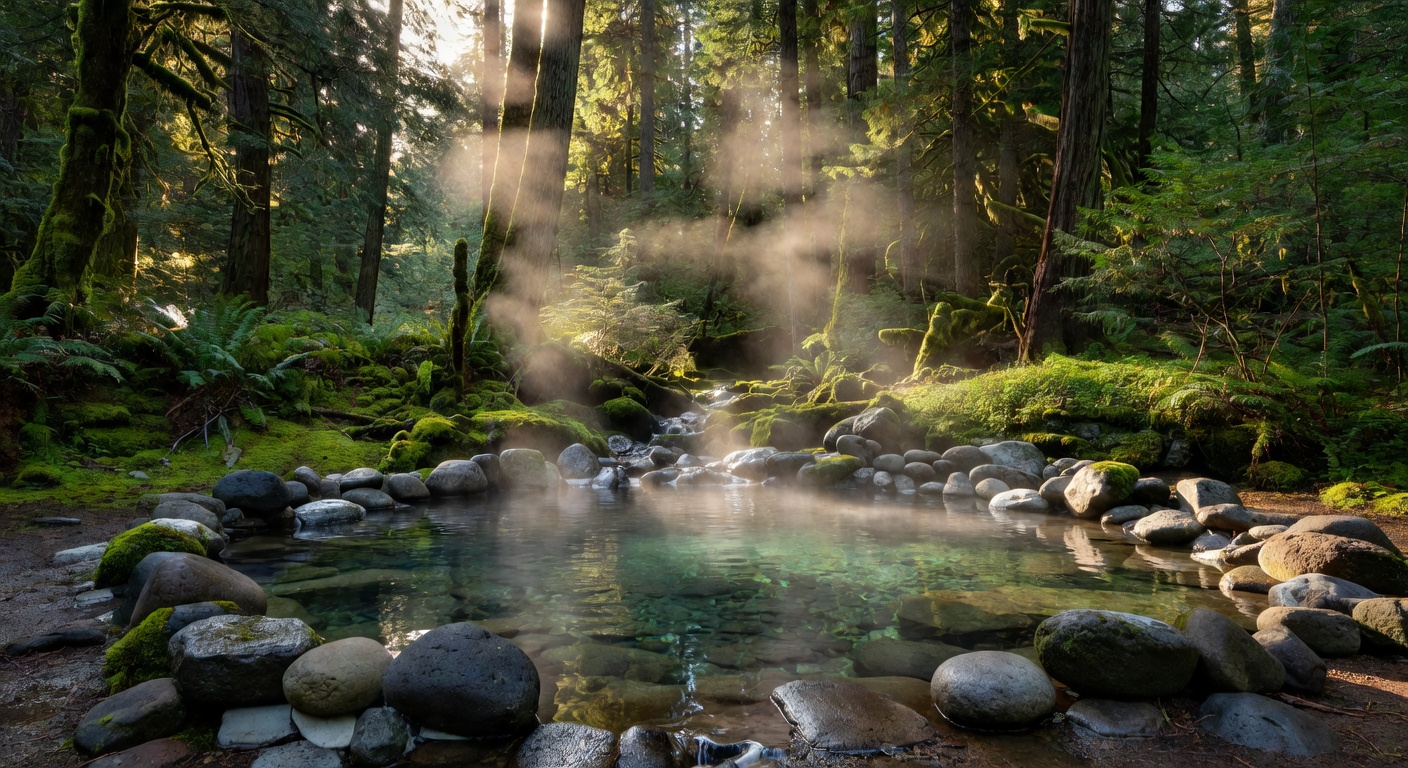
Onsen bathing is one of Japan's most beloved restorative rituals — a practice of mindful rest
Shinrin-yoku: The Forest as Medicine
In 1982, Japan's Ministry of Agriculture, Forestry, and Fisheries coined the term shinrin-yoku — "forest bathing." It describes the simple practice of spending time in a forest, not hiking or exercising, but simply being: walking slowly, breathing deeply, using all five senses to receive what the forest offers.
Research since then has consistently shown that spending time among trees reduces cortisol levels, lowers blood pressure, boosts immune function, and improves mood. The forest does not require you to do anything. It only requires your presence.
For those without access to a forest, urban parks, temple gardens, or even a green balcony can offer similar qualities. The practice is not about the location — it is about the quality of attention you bring.
Mono no Aware: The Beauty of Passing Things
One of the most distinctive aspects of Japanese mindfulness is its relationship with impermanence. Mono no aware — literally "the pathos of things" — is a sensitivity to the transience of all things, tinged with both sadness and appreciation. It is the feeling that comes when you notice cherry blossoms beginning to fall, or watch a beautiful sunset, or hear a piece of music that moves you: a bittersweet awareness that this moment is precious precisely because it will not last.
To cultivate mono no aware is to bring a quality of tenderness to daily life — to notice small things, to feel gratitude for what is present, and to hold it lightly, knowing it will pass. This is not melancholy. It is a form of love.
Practical Entry Points
You do not need to become a Zen monk to access these practices. The following are simple entry points that can be woven into any life:
- Spend 5 minutes each morning seated in silence before reaching for your phone
- When walking, walk slowly and look at what is around you — especially the small things: a tile, a leaf, the quality of the morning light
- Practice ichi-go ichi-e in conversation: give the person you are with your full and undivided attention
- Once a week, visit a garden, park, or natural space and simply be there, without agenda
- At the end of each day, pause for a moment and notice three things that were beautiful, interesting, or kind
Japanese mindfulness is not a technique. It is a way of moving through the world — gently, attentively, with gratitude for what is here. And in that gentleness lies, perhaps, the most radical act available to any of us.