There is a concept in Japanese culture called asa no shitaku — the preparation of morning. It is not a rigid schedule, nor a productivity hack. It is, at its heart, an act of care: for oneself, for one's space, and for the day that is waiting to unfold.
In many traditional Japanese homes, the morning begins before the sun has fully risen. There is a quietness to this hour that feels borrowed from the night — not yet claimed by the demands of the day. It is precisely this quality that makes the morning, in Japanese thinking, sacred.
"The way you begin a thing shapes everything that follows. A morning of calm intention is the foundation of a day lived well."
The First Act: Water and Stillness
Many Japanese households begin the day with a glass of plain warm water — not tea, not coffee, just water. This practice, rooted in both folk wisdom and kampo (traditional herbal medicine), is said to gently awaken the body's systems, stimulate digestion, and bring awareness back to the physical self after sleep.
It is a small act, but its simplicity is its power. Before any screen is consulted, before any decision is made, you stand in your kitchen with a warm glass of water and simply exist. This is the first breath of the day.
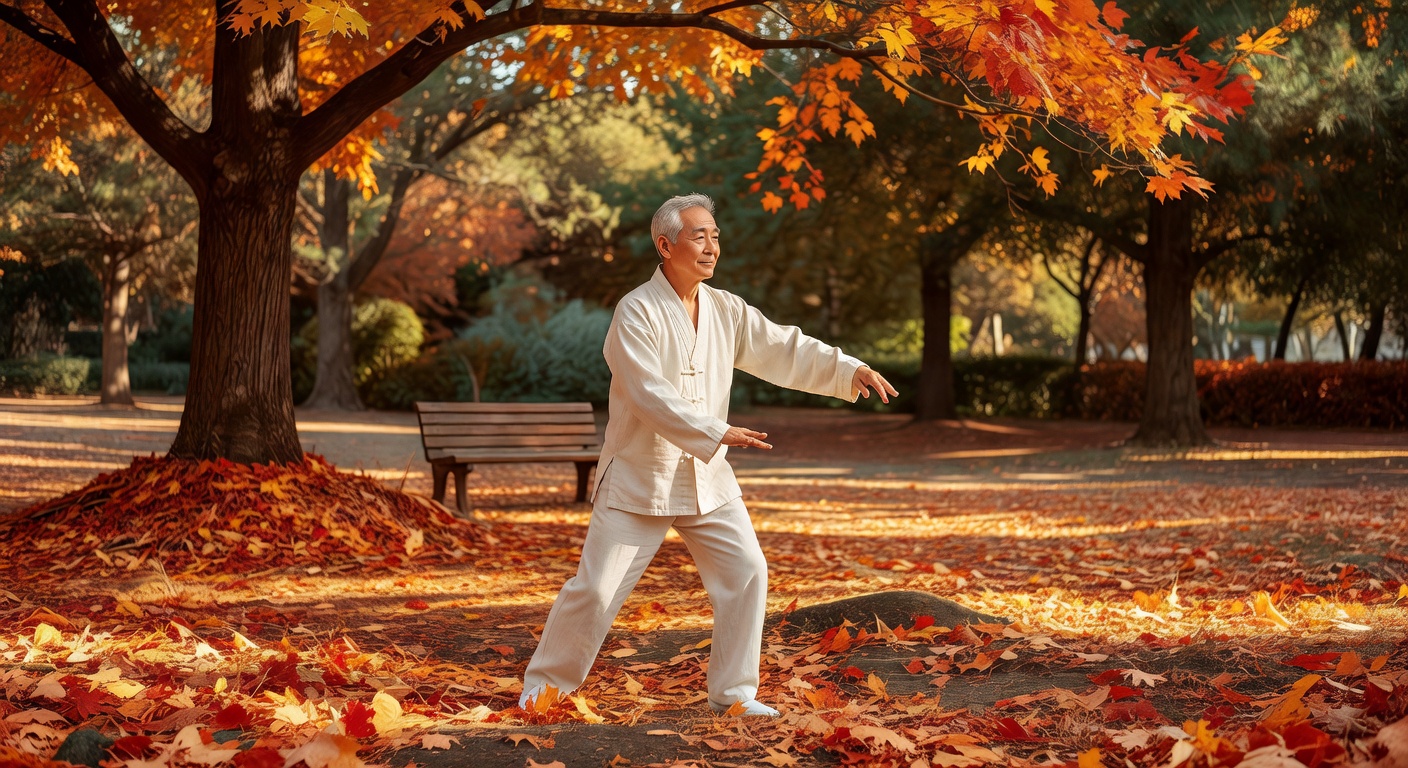
Morning movement in a park near Meguro River, Tokyo
Movement Before the World Arrives
Across Japan, parks fill early with walkers, stretchers, and practitioners of tai chi, rajio taiso (radio calisthenics), or simply those who walk slowly and with attention. Movement in the morning is not about burning calories — it is about arriving in the body.
Rajio taiso, a series of gentle stretching and joint-mobilising exercises broadcast on NHK radio since 1928, is perhaps the most democratic morning ritual in Japan. It takes only three minutes and is practised by children, office workers, and the elderly alike. The exercises are designed not for fitness but for awakening — gentle, deliberate, complete.
The Japanese Breakfast as Nourishment
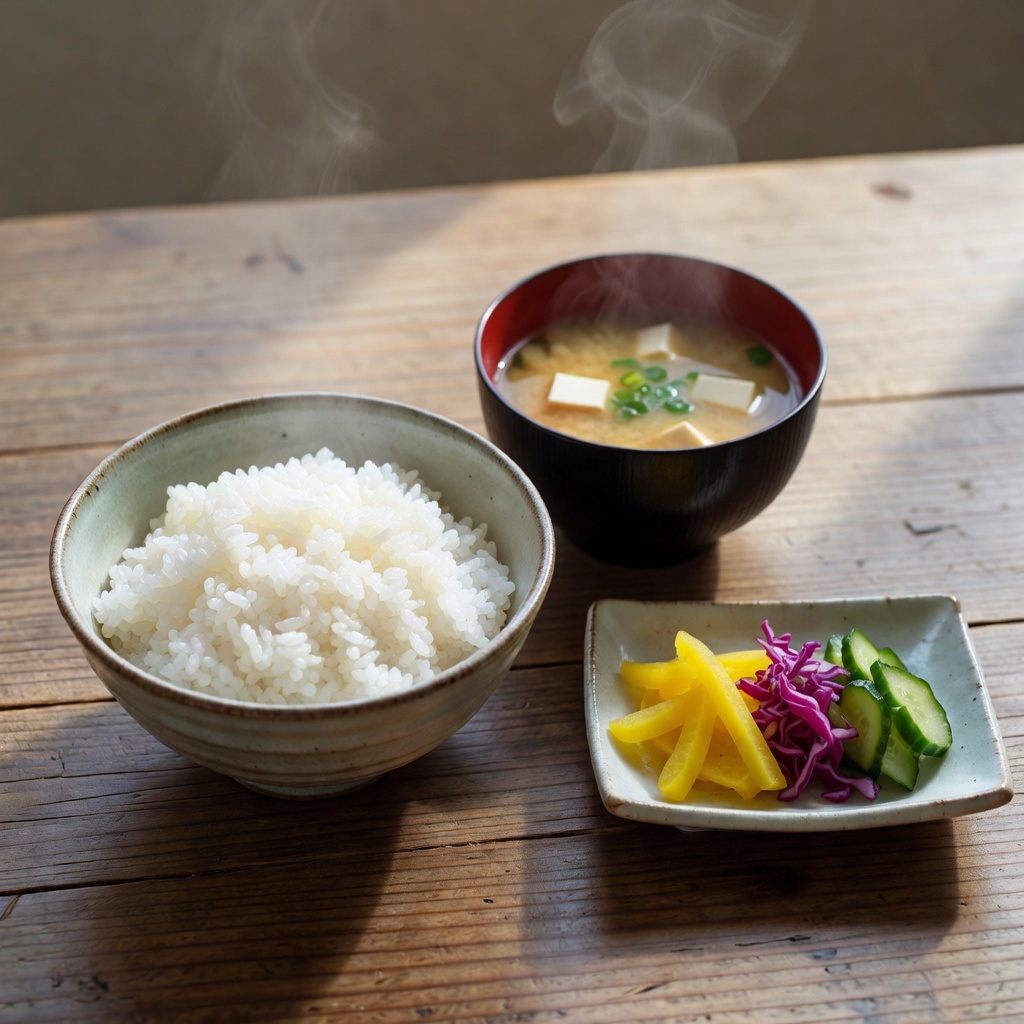
The traditional Japanese breakfast — ichiju sansai, or "one soup, three sides" — is the antithesis of the rushed meal eaten standing over a sink. It typically includes:
- Steamed short-grain rice — the steady, grounding centre of the meal
- Miso soup with tofu, wakame, or seasonal vegetables
- A small piece of grilled fish — mackerel, salmon, or dried horse mackerel
- Pickled vegetables (tsukemono) to stimulate the palate
- A side of soft-boiled egg or natto, depending on the region
This breakfast is not difficult to prepare, but it requires that you have given the morning enough time. Setting the table, placing the bowls, ladling the soup — each step is a quiet act of preparation that prepares not only the food, but the person who will eat it.
The Closing Ritual: Space and Order
Before leaving the home, many Japanese people take a few minutes to restore order: folding the bedding, wiping the kitchen counter, straightening a cushion. This is not obsessive cleanliness — it is the recognition that the space we return to in the evening should be a place of rest, not of accumulated disorder.
To leave a tidy home is to leave yourself a gift. The evening self, tired and ready for rest, will be grateful to the morning self who made this small effort.
"The morning that belongs only to you — before the world asks anything of you — is perhaps the most precious time of the day."
A Japanese morning routine is not about adding more. It is about doing fewer things, but doing them with full attention. It is about reclaiming the morning as a space of quiet sovereignty before the day begins its requests.
Start with water. Move gently. Eat with care. Leave your space in good order. These are not grand gestures. But practised daily, they become the invisible architecture of a life well lived.